The Invisible Fit: What Makes Hair Extensions Look and Feel Natural
Truly natural-looking hair extensions are created by matching more than color; they must also respect the density, movement, comfort, and daily habits of the person wearing them.
Length gets the attention, but convincing extension work is an exercise in balance. The added hair needs support, attachment points need coverage, and the finished shape must move as one haircut.
There is also a wellness side. Extensions should enhance confidence without asking the scalp and natural strands to carry unsuitable tension. Fit, maintenance, and honest communication matter as much as the reveal.
Begin With a Density Budget
Think of natural hair density as a support budget. Fine or sparse areas cannot safely hide and carry the same quantity of added hair as dense, strong sections. More grams do not automatically create a better result.
A thoughtful plan considers:
- The density available in each area of the scalp
- The strength and condition of the natural strands
- The amount of length or fullness desired
- How the weight will be distributed
- Whether the attachment points can remain covered during movement
- How frequently the wearer can return for maintenance
Someone with fine hair may achieve a beautifully believable result through moderate fullness and careful distribution. Trying to add extreme length and volume without enough natural support can make the blend harder to conceal and increase stress on the hair.
The Attachment Map Matters as Much as the Method
Clients often begin by researching tape-ins, wefts, keratin bonds, or removable halos. Method matters, but placement within that method matters just as much.
An attachment map should allow enough natural hair above each piece to create coverage. It must also respect the hairline, part, crown patterns, and areas exposed by ponytails or clips. A technically secure attachment can still be poorly positioned for the way a person actually wears their hair.
Ask for a Movement Check
Before leaving the salon, move the hair as you would at home. Change the part slightly, gather a low ponytail, tuck the sides behind the ears, and look at the back from more than one angle. The goal is not to make every attachment invisible in every possible style. It is to confirm that the system supports the styles you wear most.
Blending Is a Haircut Decision
One of the clearest signs of poorly blended extensions is a visible shelf where the natural ends stop and the added length continues. The solution is not always more extension hair. Often it is better shaping.
The natural cut, extension distribution, and final refinement should be designed together. Short blunt hair may require different density and layering from long, softly tapered hair. Curly hair needs a plan that still connects when the pattern contracts, while straight hair tends to reveal abrupt weight lines more easily.
A realistic goal also protects the perimeter. If the natural hair is fragile or very short around the front, forcing maximum length into that area may create a less believable result. Sometimes the most natural transformation adds fullness first and length second.
Color Matching Has More Than One Dimension
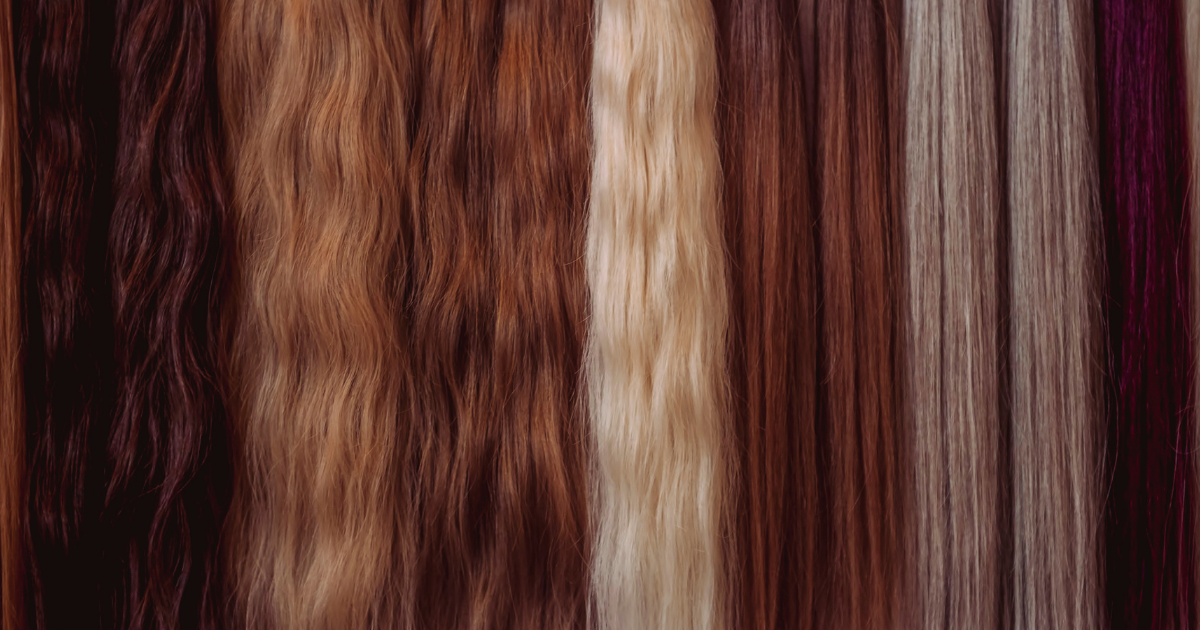
Matching only the root color is rarely enough. Hair can shift in depth and tone from scalp to ends, and highlighted hair may contain several shades in one small section.
A convincing match considers:
- Depth: How light or dark the hair appears
- Tone: Whether it reads warm, cool, neutral, golden, coppery, or ashy
- Dimension: The mixture of highlights, lowlights, and base color
- End color: The shade beside which the extension hair will be most visible
- Lighting: How the match appears in daylight as well as indoors
Using more than one extension shade can mimic the variation found in natural hair. The blend may also require color work on the wearer’s hair, the extensions, or both, but any chemical processing should follow the manufacturer’s guidance for that hair.
Texture Matching Is About Behavior
Two hair samples can look similar while lying flat and behave very differently after washing. Texture matching should account for wave pattern, strand thickness, surface smoothness, humidity response, and how much styling is required to make the two textures cooperate.
This matters especially if you air-dry often. A blend that looks seamless only after a full blowout may not feel natural in everyday life. Bring photos of your hair both styled and air-dried so the specialist can see the complete routine.
Comfort Is a Design Requirement
New extensions may feel unfamiliar, but pain should not be treated as the price of beauty. The American Academy of Dermatology’s extension guidance says that pain or a headache can indicate that the style is too tight and should be loosened.
Repeated pulling can contribute to traction alopecia. The British Association of Dermatologists explains that early traction-related loss may improve when tension stops, while prolonged pulling can permanently damage follicles.
Contact the stylist if you notice:
- Persistent pain, headaches, or a pulling sensation
- Redness, bumps, crusting, or tenderness near attachments
- Attachments twisting or pulling unevenly
- Sudden matting close to the scalp
- Visible breakage or thinning around the hairline
Do not wait for a routine maintenance visit if something feels wrong. Prompt adjustment is kinder to the natural hair and usually easier than repairing a problem after weeks of tension.
The Scalp Still Needs Regular Access
Extensions change how hair is divided and handled, but they do not eliminate normal scalp needs. Oil, sweat, skin cells, and styling products still accumulate. Washing should clean the scalp without rough circular scrubbing that tangles the attachment area.
The AAD’s healthy-hair recommendations advise washing according to hair type, concentrating shampoo on the scalp, conditioning after washing, and handling wet hair gently. Extension-specific product placement may vary, so follow the care directions for the installed method.
After washing, make sure attachment areas dry thoroughly. Support the roots while detangling, begin at the ends, and work upward in sections. Use the brush or comb recommended by the specialist, since tools that snag at bonds, tapes, or wefts can create avoidable pulling.
Maintenance Protects Both the Blend and the Hair
As natural hair grows, attachments move farther from the scalp. That changes the leverage on the strands and can make sections easier to twist, tangle, or show. Maintenance is therefore structural, not merely cosmetic.
The correct schedule depends on the method, growth rate, shedding, home care, and condition of the natural hair. Some systems are removed and reapplied; some are moved up; others remain until removal and replacement. A removable halo follows a different routine because it is taken off by the wearer rather than attached continuously.
Keep a simple weekly check:
- Feel for tangles or joined sections near the roots.
- Check whether any attachment has slipped, twisted, or become visible.
- Notice new sensitivity or tension.
- Look for unusual breakage or thinning.
- Confirm that washing and drying remain manageable.
Choose a Method Around Real Life
The best method is the one that suits the natural hair and can be maintained within the wearer’s routine. Ask how each option affects washing, drying, sleeping, exercise, swimming, heat styling, ponytails, and color services.
Hair Smithsonian in Locust Grove, Georgia, currently offers tape-in, halo, hand-tied, and keratin-bond extensions. Its published guidance describes tape-ins as requiring removal and reapplication every six to eight weeks, halos as removable at home, hand-tied wefts as an option for fine-to-medium-density hair, and keratin bonds as individually attached strands.
Those differences create useful consultation questions. Someone wanting occasional event volume may value removability, while someone seeking daily length may prefer a professionally maintained method. Fine areas around the face may need a different solution from the fuller back of the head.
Know When the Scalp Needs Medical Attention
Not every case of shedding or thinning is caused by extensions. The National Library of Medicine’s hair-loss overview lists many possible causes, including hereditary patterns, illness, medication effects, stress, infection, and excessive tension.
If hair loss is rapid, patchy, painful, itchy, inflamed, or continuing after tension has been removed, seek medical evaluation rather than asking a stylist to diagnose it. The Mayo Clinic’s diagnostic overview explains that clinicians may consider hair-care routines, diet, medical history, family history, and targeted testing when determining the cause.
Texture and styling practices also deserve individualized care. Johns Hopkins Medicine specifically advises Black women concerned about traction-related loss to reduce tight styling, limit heat, and pay attention to breakage or increased scalp visibility.
The Most Natural Result Feels Integrated
Great extensions should not simply resemble natural hair in a photograph. They should integrate with the wearer’s haircut, color, texture, movement, schedule, and scalp comfort.
Before choosing length, ask how much weight the natural hair can support. Before choosing a method, ask how it fits your routine. Before leaving the salon, check movement and comfort. The most believable transformation is not necessarily the largest one; it is the one designed to belong.