Your Skin Has a Recovery Budget: How to Plan Rejuvenating Facials Wisely
Facial rejuvenation treatments are most useful when their intensity matches what your skin can comfortably handle today, not when every available exfoliant and add-on is combined into one session.
It is easy to assume that stronger treatment means faster improvement. Skin does not always cooperate with that logic. A person may arrive hoping to smooth texture and brighten dullness while also using a retinoid, recovering from sun exposure, managing seasonal dryness, or adjusting to a new acne product. Adding more stimulation can sometimes produce irritation instead of radiance.
A healthier approach is to think of skin as having a recovery budget. Every exfoliating, extracting, resurfacing, or energy-based service draws from that budget. Sleep, gentle care, moisturization, sun protection, and time help replenish it.
Start With the Skin Barrier
The outermost part of the epidermis is called the stratum corneum. It is made of flattened cells held within a lipid-rich matrix, and it helps limit water loss while providing protection from the external environment. The National Library of Medicine’s overview of the stratum corneum explains this structure and its barrier role in greater detail.
When the barrier is functioning well, skin is generally better prepared for routine cleansing, controlled exfoliation, and professional care. When it is already stressed, even familiar products may suddenly sting.
Signs worth mentioning before a facial include:
- New burning, stinging, itching, or unusual sensitivity
- Cracking, peeling, or persistent tightness
- A recent sunburn or significant tanning
- An active rash, cold sore, infection, or open area
- A reaction to a new product or prescription
- Recent waxing, peel, laser, or other resurfacing procedure
These details do not automatically rule out all care. They may change what is performed, which areas are avoided, or whether the skin should recover first.
Choose the Goal Before Choosing the Technique
“Rejuvenation” is a broad beauty term. One client may mean temporary hydration and a refreshed surface. Another may be concerned about congestion, uneven color, rough texture, fine lines, or an upcoming event. Those goals do not all require the same treatment.
A useful consultation separates the desired change from the technique advertised on the menu. Ask:
- What is the main concern we are addressing today?
- What can realistically improve after one service?
- Which result would require a series or a medical procedure?
- How much redness, peeling, or sensitivity could occur?
- How will this interact with my current home routine?
This keeps treatment selection grounded. It also makes it easier to recognize when a calming or moisturizing facial is the better choice than additional exfoliation.
Count Every Source of Exfoliation
Exfoliation can be mechanical, chemical, or device-assisted. Dermaplaning physically removes surface material. Acids loosen connections among surface cells. Hydradermabrasion combines fluid delivery with controlled surface exfoliation. Each technique can have a place, but their effects are cumulative.
The home routine counts too. Retinoids, alpha hydroxy acids, beta hydroxy acids, acne medications, scrubs, cleansing brushes, and high-strength vitamin C formulas may influence skin tolerance. Do not stop a prescription on your own. Instead, give the provider a complete list and follow instructions from the professional who prescribed it.
The American Academy of Dermatology’s chemical-peel preparation guidance recommends disclosing medications, supplements, previous cosmetic treatments, a tendency to scar, and a history of cold sores. Although a customized facial is not necessarily a chemical peel, the information-sharing principle applies whenever exfoliation may be involved.
More Tingling Does Not Prove More Benefit
Sensation is not a reliable score for effectiveness. A product can feel active without being right for the skin, while a well-selected gentle treatment may produce a better-looking result with less disruption. Tell the provider if burning or discomfort becomes intense rather than assuming you must tolerate it.
Separate Routine Facials From Medical Procedures
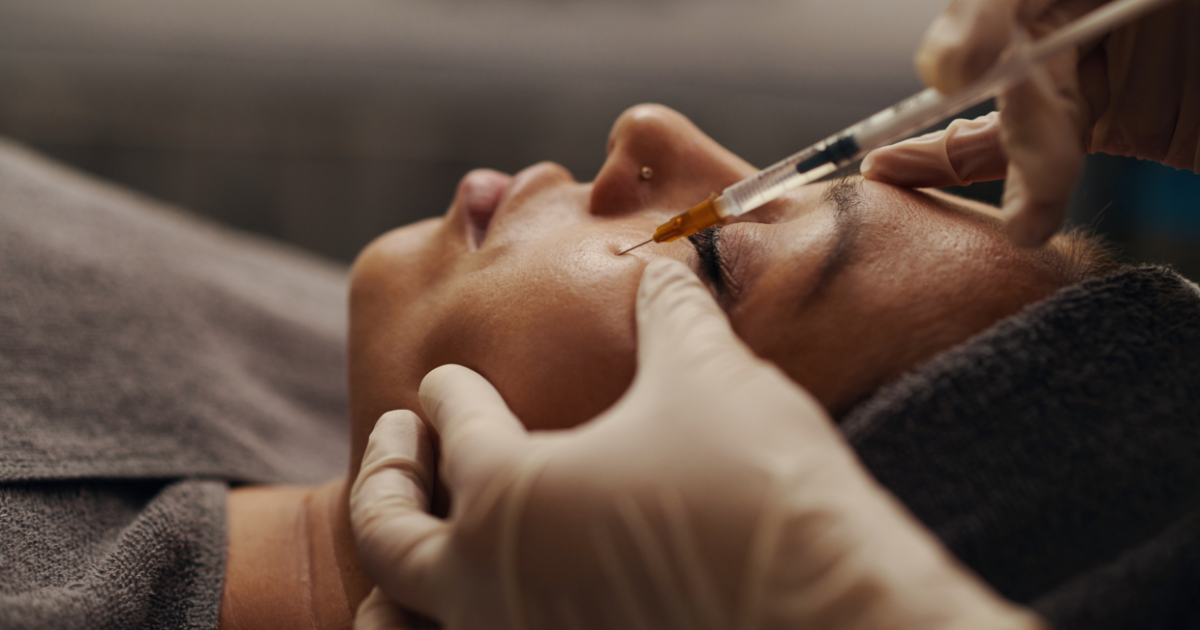
Beauty menus often place relaxing facials, superficial peels, microneedling, and energy-based treatments near one another. They are not interchangeable levels of the same service. Their mechanisms, risks, provider requirements, and recovery periods differ.
The Food and Drug Administration’s microneedling guidance notes that legally marketed medical devices have been authorized for specific uses and that treatment can involve redness, dryness, peeling, bruising, pigment changes, infection, and other risks. The FDA recommends asking about provider training, device authorization, and the use of a new cartridge for every person and every session.
Chemical peels also require careful supervision. The FDA warns against high-concentration at-home chemical peel products because incorrect concentration, application time, or repeated use can cause chemical burns, infection, pigment changes, and scarring.
The takeaway is simple: ask what category a proposed treatment falls into, who will perform it, what qualifications are required, and what recovery instructions apply.
Plan Around Real-Life Skin Stress
Your skin does not experience a facial in isolation. Consider what happened during the previous week and what is planned for the next one.
Sun and Heat
A beach weekend, outdoor sports, or prolonged heat exposure can leave skin more reactive than usual. The American Academy of Dermatology recommends daily broad-spectrum, water-resistant sunscreen with SPF 30 or higher and gentle cleansing instead of scrubbing.
Sun protection is not merely post-facial caution. It is a central part of any plan intended to address premature aging or uneven tone.
Events and Photography
Do not test a new high-intensity service immediately before an important event. Even treatments with limited expected downtime can produce an individual reaction. If the goal is event-ready skin, discuss timing early and favor a service your skin has handled well before.
Seasonal Dryness
Indoor heating, air conditioning, travel, and changing humidity can alter how skin behaves. When the face feels dry and irritated, repeated exfoliation may compound the problem. The AAD’s moisturizer-selection guidance notes that creams and ointments generally retain more moisture than lighter lotions and recommends avoiding fragranced products when skin is sensitive or very dry.
Use a Simple Treatment Traffic Light
This framework is not a diagnosis, but it can help you organize what to report during a consultation.
- Green: Skin feels stable, the current routine is well tolerated, and there has been no recent sunburn, rash, or unexpected reaction.
- Yellow: Skin is unusually dry, mildly irritated, recently waxed, or adjusting to new active products. The plan may need to be simplified.
- Red: There is significant pain, swelling, blistering, an open wound, active infection, severe rash, or another unexplained change. Cosmetic treatment should wait while appropriate medical advice is obtained.
Aesthetic professionals can assess cosmetic concerns and work within their training. A dermatologist should evaluate persistent, painful, worsening, or unexplained skin problems.
Aftercare Should Be Deliberately Boring
The days after a facial are rarely the time to introduce three new serums. Unless the provider gives different instructions, the safest general pattern is simple: gentle cleansing, appropriate moisturizer, sun protection, and avoidance of picking or unnecessary friction.
Write down exactly when normal active products can resume. Instructions may differ according to the service, skin response, and prescription use. If the skin becomes increasingly painful, swollen, blistered, crusted, or otherwise worse instead of gradually settling, contact the provider promptly.
How Radiant Skin Approaches Customized Facials
Radiant Skin currently offers facial services at its Richmond Hill and Rincon, Georgia, locations. Its published facial process includes cleansing, exfoliation, extraction, and moisturizing, with possible options such as dermaplaning, superficial peels, hydradermabrasion, and oxygen facials.
The practice states that its aestheticians begin with a complimentary consultation and tailor recommendations to the client’s skin and goals. That structure is most valuable when clients also disclose medications, active products, recent procedures, sun exposure, sensitivities, and the amount of recovery time available.
Build a Plan Your Skin Can Sustain
A thoughtful rejuvenation plan does not try to win every skin goal in one day. It identifies the priority, accounts for current barrier condition, selects an appropriate level of treatment, and protects the result with consistent home care.
Before a facial, bring a list or photos of the products you use and note any recent reactions. Afterward, follow the specific instructions you receive and resist the urge to add extra exfoliation. Skin often looks its healthiest when professional treatment and recovery are allowed to work as a team.