Smooth Moves: Waxing Services in Kansas City, MO
Unwanted hair is completely normal, but managing it does not have to become a daily chore. Professional waxing services in Kansas City, MO offer longer-lasting…

Custom haircut services should be judged not only by the mirror reveal, but by how comfortably the shape performs through washing, styling, changing weather, and several weeks of growth.
A fresh blow-dry can make almost any cut look polished for an afternoon. The more revealing test comes later, when the hair has been washed at home, exposed to humidity, pulled back for exercise, air-dried on a busy morning, and allowed to grow.
A successful haircut should not require salon-level effort every day. It should preserve its general balance, support the wearer’s natural texture, and remain adaptable as the ends move farther from their original cutting lines.
This long-term view changes the consultation. Instead of asking only, “What do you want today?” the better question becomes, “How should this haircut work for the next six to ten weeks?”
Every haircut moves through a predictable cycle. Understanding that cycle helps clients choose a shape and maintenance plan that match their priorities.
Some styles are intentionally sharp and require frequent reshaping. Others are designed with softer lines and blended transitions so they can evolve gradually. Neither is inherently better. The right choice depends on how often the client wants to return and how much change they tolerate between visits.
Haircut timing is often discussed as if everyone’s hair changes at the same pace. Growth rate matters, but shape, length, density, texture, and styling preferences matter just as much.
A short cut can feel different after a small amount of growth because the perimeter and internal structure are highly visible. Long layers may remain wearable much longer, although the ends can gradually become more tangled or uneven.
Regular cutting does not make follicles produce hair faster. Cleveland Clinic’s explanation of hair growth and trimming notes that trims help manage split ends and breakage rather than increasing the biological growth rate.
A practical maintenance schedule should consider:
Reference photos show what a client likes visually, but they rarely reveal the maintenance behind the image. A useful consultation translates inspiration into a realistic plan.
The stylist needs to understand how the client spends a normal week. Hair that must fit beneath a helmet, stay secured during workouts, or dry without heat needs different planning from hair that is professionally styled several times a week.
These answers influence layer placement, fringe length, perimeter strength, and how much weight should remain in different areas.
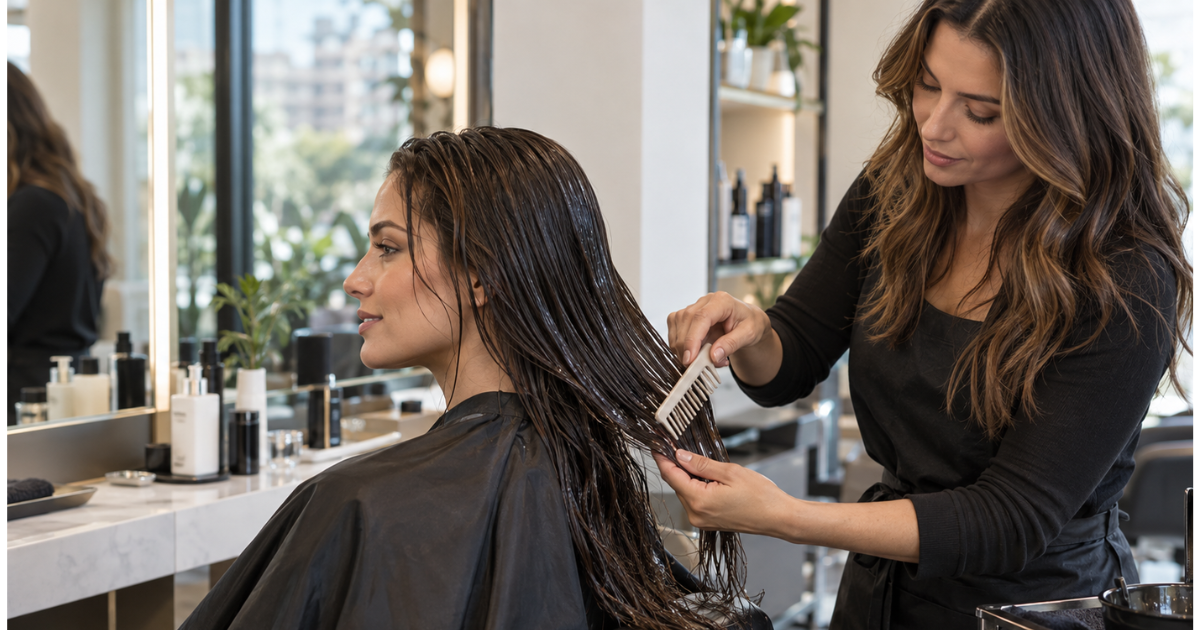
Wet hair offers control and makes it easier to establish clean sections and precise foundational lines. Dry hair reveals movement, expansion, natural parting, shrinkage, and how individual sections settle around the face.
Using both perspectives can be valuable. A stylist may establish the main shape while the hair is wet, then refine the perimeter, layers, or face frame after drying. Dry detailing can reveal pieces that appear balanced under tension but behave differently when released.
This approach does not mean one cutting method is always superior. Technique should reflect the texture, desired result, and stylist’s professional judgment.
Straight hair often displays cutting lines clearly, while waves and curls can disguise small variations but respond dramatically to weight removal. Tightly curled sections may shrink at different rates, and one head can contain several curl patterns.
The American Academy of Dermatology recommends adapting hair care to the individual hair type. Its separate guidance for curly and coily hair explains that these textures may be more prone to dryness and breakage.
For a cut to grow out comfortably, the stylist may need to account for:
A curl-conscious shape does not force every section to look identical. It creates visual balance while allowing the texture to retain its character.
A haircut that behaves beautifully in dry indoor air may respond differently outdoors in Jacksonville. Moisture in the atmosphere can affect volume, frizz, curl return, and the longevity of smooth styling.
The National Weather Service explains that dew point reflects the amount of moisture in the air. A higher dew point generally means muggier conditions, which can make humidity-sensitive hair more likely to expand or revert toward its natural pattern.
A climate-aware cut may preserve enough weight to control expansion, encourage natural movement instead of requiring rigid straightness, or use layers strategically rather than removing bulk everywhere.
Product choices help, but they cannot permanently override the environment. A strong haircut should still look intentional when the weather changes its finish.
One useful measure of a haircut is whether it reduces the need to repeatedly correct the hair with heat. If the shape supports natural movement, it may be possible to achieve a presentable result with less brushing, fewer iron passes, or a shorter blow-dry.
The American Academy of Dermatology’s guidance on styling without damage recommends limiting excessive heat and handling wet hair carefully. Research examining hair-shaft damage from blow-drying also indicates that temperature, distance, and drying technique affect the fiber.
To preserve the cut while reducing unnecessary stress:
A personalized shape should provide more than one acceptable styling option. The hair might look different when air-dried, diffused, or blown smooth, but each version should feel coherent.
In a warm climate, the haircut also needs to coexist with sun exposure, swimming, and frequent washing. Chlorinated water and ultraviolet radiation can contribute to dryness, fading, and roughness, particularly in lightened hair.
The AAD’s summer hair-care recommendations include protecting hair from direct sun, rinsing after swimming, using conditioning products, and considering a swim cap.
Short haircuts and wide parts may expose more scalp, so sun protection should include a hat, shade, or scalp-appropriate sunscreen. This is a health consideration as much as a styling one.
A haircut can make fine or lower-density hair appear fuller by preserving weight and placing layers carefully. It cannot diagnose or treat progressive thinning.
If a part is widening, a ponytail feels noticeably smaller, or shedding changes suddenly, discuss it with a healthcare professional. The American Academy of Dermatology outlines common signs of hair loss, including gradual thinning, widening parts, receding hairlines, and patchy loss.
A stylist can adapt a cut to the current density, but medical assessment is appropriate when there is an unexplained change.
For clients in Jacksonville, Level and Tone lists a Haircut & Blow Dry service that is customized to individual style and preference. The salon states that its stylists combine wet cutting with dry detail work, whether the guest wants a trim or a larger transformation.
The service begins with a consultation focused on style goals and lifestyle. The finished blow-dry also gives clients an opportunity to see how the shape can be styled and ask questions about maintaining it at home.
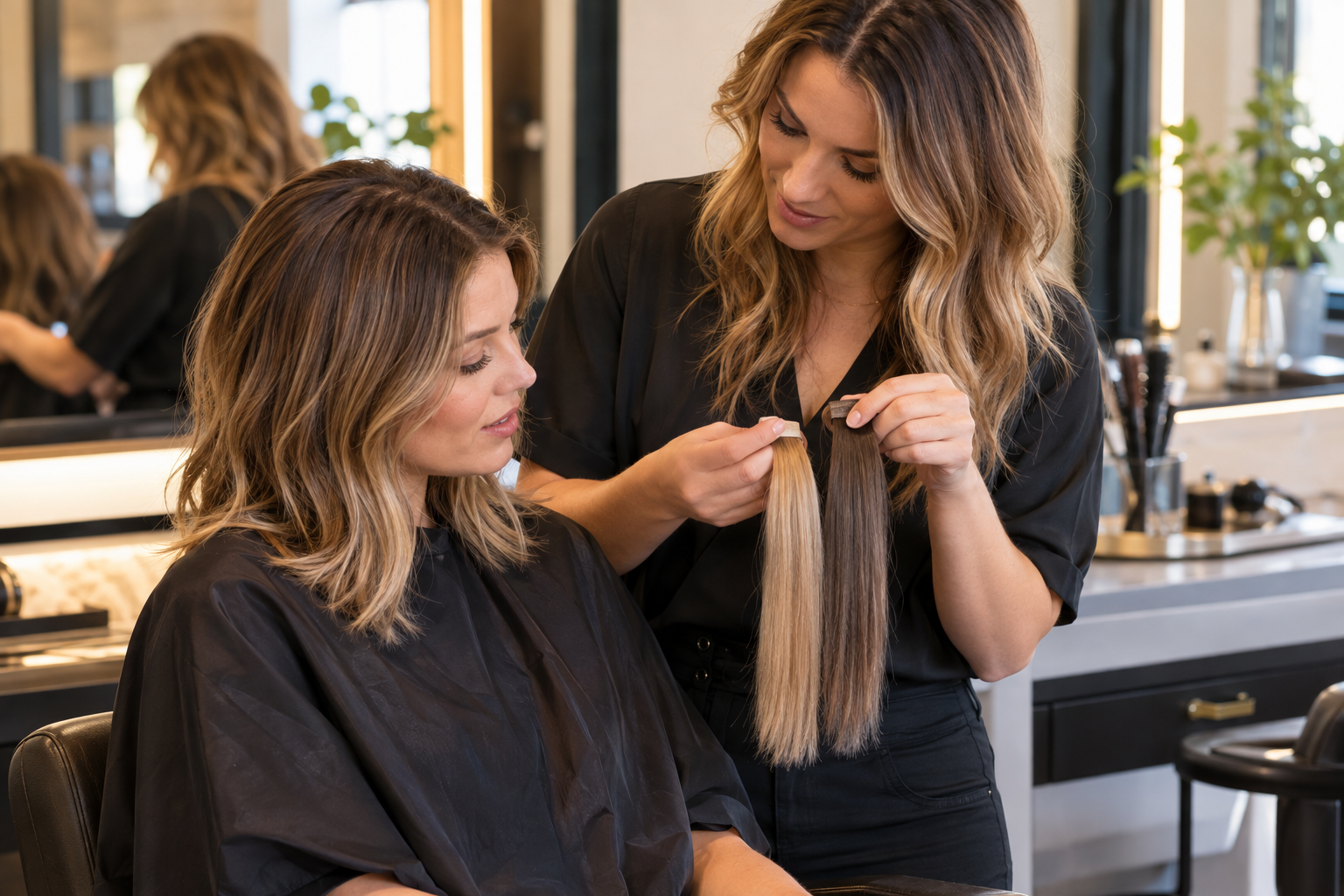
The salon’s broader menu includes color, treatments, and extensions, which is relevant when planning a cut. Layering and perimeter choices may need to support current or future color placement, extension blending, or changes in condition.
The first home wash provides useful information. Instead of asking only whether the haircut looks exactly like the salon finish, evaluate how well it functions.
If something feels difficult, take notes and photos under normal conditions. Specific feedback such as “the right side expands more when air-dried” is more useful than saying the haircut simply does not work.
The best haircut is not necessarily the one that looks most dramatic on the first day. It is the one that continues to support the person’s texture, climate, schedule, and styling ability as it grows.
Evaluating a cut over time encourages better communication and more realistic choices. It also shifts the goal from maintaining a frozen salon finish to creating a flexible shape that remains useful through real life. That is the week-eight test, and it may be the most honest measure of a customized haircut.